
From infrastructure projects to advanced medical devices, ground stainless steel continues to set new standards for strength and dependability in modern engineering. Known for its exceptional durability, corrosion resistance, and smooth surface finish, this versatile material is essential across numerous industries worldwide. It is valued not only for its mechanical qualities but also for the sleek, refined appearance it brings to both functional and aesthetic elements. Its adaptability allows it to perform well in a variety of high-performance environments, making it ideal for sectors where precision and resilience are crucial. Whether used in sturdy structural frameworks or precise components in technological equipment, ground stainless steel offers durability and a long-lasting visual appeal. Professionals and builders seeking reliable materials or exploring the full potential of ground stainless steel can find detailed product options, specifications, and expert support from reputable distributors like https://www.specialtysteel.com/. The grinding process plays a vital role in enhancing stainless steel’s natural properties, helping it meet strict industry standards and tailored specifications. Grinding improves the surface quality of stainless steel, resulting in better performance, durability, and consistency across various applications. It also supports sustainability and technological progress.
Advantages of Using Ground Stainless Steel
- Enhanced Strength: The grinding process significantly improves the material’s grain structure and tensile strength, resulting in steel tailored for demanding, high-load applications such as bridges, heavy machinery, and pipeline supports.
- Improved Corrosion Resistance: Achieving a smooth, polished, or finely ground finish reduces surface irregularities where contaminants could accumulate, further strengthening the alloy’s well-known ability to withstand rust, oxidation, and aggressive chemicals found in industrial, marine, and medical settings.
- Superior Surface Finish: Precision grinding and polishing yield surfaces that minimize friction, abrasion, and surface wear—crucial properties in applications where parts are subject to frequent movement or tight engineering tolerances, such as valves, bearings, and precision drives.
These physical improvements translate directly into substantial cost savings and a prolonged service life for critical infrastructure and equipment. Particularly in industries where safety, operational efficiency, and uptime are mission-critical, these benefits cannot be overstated. Equipment longevity helps companies avoid costly replacements and reduce the risk of operational disruptions. According to industry analysts at Technology Networks, advancements in surface engineering also enhance resistance to fatigue, stress cracking, and material degradation. This results in machinery that maintains performance even after years of intensive use, lowering businesses’ total cost of ownership.
Applications in Construction
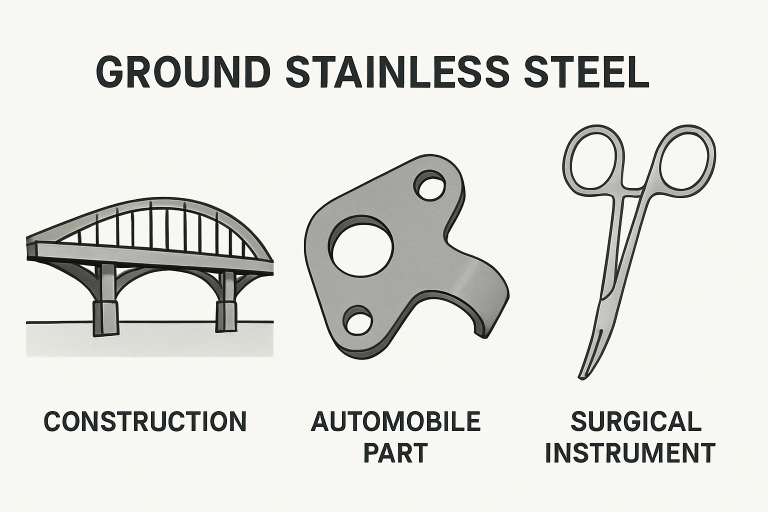
The construction sector is among the most prominent beneficiaries of ground stainless steel, utilizing its unique properties for everything from foundational support systems to striking aesthetic details. In modern architecture, ground stainless steel is a material of choice for load-bearing structures due to its impressive strength-to-weight ratio and resistance to long-term deformation. This makes it particularly well-suited for high-rise buildings, bridges, and public infrastructure where reliability and safety are paramount. Additionally, its clean, attractive finish is ideal for visible elements such as handrails, balustrades, façade panels, and cladding, which must maintain their brilliance while enduring exposure to the elements. Not only does ground stainless provide long-lasting structural integrity, but it also ensures that architectural features retain their visual allure for decades with minimal maintenance. Its ability to combine strength and beauty drives innovation in both traditional and avant-garde building designs, setting new benchmarks for safety and elegance in the built environment.
Role in Automotive Manufacturing
Automotive engineering is another field where ground stainless steel stands out, especially given the demanding nature of today’s vehicle performance and safety standards. Components made with ground stainless steel are found in numerous structural and mechanical systems within modern automobiles. According to Investopedia, automotive manufacturing relies on a variety of raw materials such as steel, aluminum, glass, and plastics to achieve a balance of strength, safety, and efficiency. Its robustness makes ground stainless steel the preferred material for high-load components such as chassis reinforcements, suspension parts, and engine brackets, which must withstand intense mechanical stress and temperature fluctuations. Ground stainless is also frequently used for exhaust systems, where superior corrosion resistance is essential for long-term durability against road salts, moisture, and chemical exposure. Even interior trims, controls, and decorative elements benefit from its smooth, refined finish, elevating the overall aesthetic and tactile quality of the vehicle cabin. The net effect is automobiles with improved reliability, extended lifespans, and reduced maintenance costs, advantages that ultimately benefit manufacturers and consumers alike. This material’s exceptional properties enhance vehicle performance, improve occupant safety, and reduce the environmental footprint by extending the lifecycle of key automotive components.
Importance of Medical Equipment
The stringent standards for cleanliness, biocompatibility, and strength in medical equipment make ground stainless steel the material of choice for surgeons and medical engineers worldwide. In operating rooms, stainless steel is used to fabricate surgical tools such as scalpels, scissors, and clamps, as well as to manufacture orthopedic implants, needles, and diagnostic devices. This material’s notable resistance to corrosion and microbial contamination ensures that medical devices remain safe and effective for repeated sterilizations over their lifespan. Ground stainless steel, with its ultra-smooth finish, helps curb the risk of bacterial adhesion and cross-contamination—factors vital to reducing surgical infections and improving patient outcomes. Its biocompatibility allows implants and prosthetics to perform reliably within the human body, reducing the likelihood of allergic reactions or implant failure. In essence, ground stainless enables an entire generation of reliable, long-lasting medical tools and devices that are at the forefront of modern patient care and surgical innovation.
Advancements in Stainless Steel Technology
Recent advances in metallurgical technology have unlocked new frontiers for ground stainless steel’s capabilities, driving applications into even more demanding sectors. Innovative treatments, such as cryogenic processing, enhance metal toughness by transforming its microstructure, producing steel that is not only harder and more wear-resistant but also remarkably ductile. Modern advances in alloy compositions—such as blending with elements like nickel, molybdenum, or niobium—result in specialized grades with precisely tuned properties tailored for extreme environments. Research teams at institutions such as the University of Hong Kong have developed pioneering families of stainless steels that successfully merge outstanding toughness with high formability, enabling their use in high-pressure vessels, aerospace components, and earthquake-resistant structures. These breakthroughs expand the palette for architects, designers, and manufacturers, empowering them to tackle projects where conventional materials would fall short.
Environmental Considerations
In a world increasingly focused on environmental responsibility, ground stainless steel stands out as a model material for sustainable industry. Its inherent recyclability is one of its most compelling attributes—old components and waste material can be efficiently re-melted and reused in new products with virtually no loss in mechanical performance. This attribute conserves valuable resources and reduces the carbon footprint of steel production. The remarkable longevity and corrosion resistance of ground stainless steel also contribute to sustainability by minimizing the frequency of part replacements and the corresponding energy and resource demands for manufacturing, transportation, and waste disposal. Many green building certifications actively reward the use of durable, recyclable materials like stainless steel for their role in reducing lifecycle impacts and supporting circular economy principles. As new global regulations drive industries towards more eco-conscious practices, ground stainless steel’s environmental profile will grow increasingly important—ensuring that next-generation buildings, vehicles, and machines are as resource-efficient as they are robust.
Conclusion
Integrating ground stainless steel into your projects delivers substantial competitive advantages—raising the bar for strength, longevity, and sustainability. The material’s versatility, performance under stress, and eco-friendly credentials make it a keystone of modern engineering and design. As ongoing advancements in metallurgical science continue to unlock new possibilities, architects, engineers, and manufacturers can look forward to even more robust and adaptive stainless alloys suited to an ever-expanding range of challenges. Remaining up to date with state-of-the-art innovations empowers project leaders to select the best solutions for durability, efficiency, and sustainability, securing success in sectors where reliability is paramount and progress never stops.