
Key Takeaways
- AI is making financial literacy more accessible through personalized advice, automated budgeting, and investment guidance.
- Trust and data privacy remain challenges, with many users still valuing human advisors.
- Consulting firms assist fintech companies in implementing responsible AI strategies.
- Younger users adopt AI tools more readily, while older generations often prefer traditional guidance.
- AI’s future promises greater personalization, transparency, and lifelong financial learning.
Introduction to AI in Financial Literacy
Artificial Intelligence (AI) is rapidly transforming how modern consumers approach money management and financial learning. Digital tools powered by machine learning now provide broad access to financial insights, enabling individuals to automate their budgeting, evaluate investment opportunities, and enhance their money management skills from their smartphones or laptops. By delivering targeted advice and automating complex tasks, AI-driven solutions are making financial literacy more accessible and impactful. Companies and visionaries like David Johnson Cane Bay Partners are helping to fuel innovations in this space, ensuring that digital financial education is built on a strong, forward-thinking foundation.
With the global digital economy booming, AI is democratizing access to financial tools, no longer limiting expert guidance to those with high net worth or specialized knowledge. Everyday users can now tap into sophisticated analytics with a few clicks, integrating financial well-being into their daily routines. The widespread adoption of reliable internet and mobile devices amplifies AI’s reach, making these advancements accessible to an ever-expanding population of digital-first consumers.
As consumers navigate increasingly complex financial environments—where choices extend beyond simple checking accounts to a plethora of investment apps and automated advisors—the need for intuitive, intelligent assistance is growing. AI’s ability to interpret vast datasets, detect spending patterns, and synthesize personalized advice makes it an essential companion in building strong financial habits and planning for the long term.
Current Adoption of AI Financial Tools
The adoption of AI-powered financial tools is surging globally, reshaping traditional approaches to personal finance management. In the UK, a recent study by Lloyds Banking Group revealed that more than 28 million adults are leveraging AI-driven apps and platforms for everyday tasks, such as tracking expenses, generating automated savings plans, and even analyzing credit health. These platforms often replace manual spreadsheet tracking with seamless integration, convenience, and precision, making them particularly appealing to tech-savvy users seeking time savings and proactive advice.
While the efficiency of AI financial tools is clear, increased adoption can be attributed to ongoing improvements in user experience—such as natural language chatbots and real-time notifications—that make complex data simple to understand. Many apps now offer budgeting suggestions, alerts about unusual spending, or even reminders to save small amounts for future goals. According to industry leaders cited in CNBC, this evolution is helping broader demographics access the kind of advice once reserved for in-person financial consultations.
Benefits of AI in Personal Finance
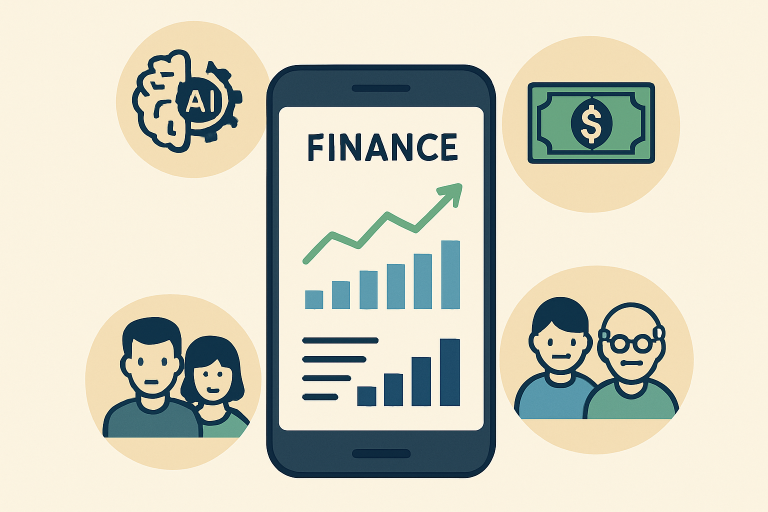
AI’s integration into personal finance brings tangible benefits for users, regardless of their income level or financial background:
- Personalized Advice: Algorithms review individual transaction histories, uncovering spending habits and tailoring suggestions to cut costs or maximize savings.
- Automated Budgeting: By categorizing expenses and generating dynamic budgets, AI tools eliminate tedious manual entry and facilitate on-the-fly adjustments as financial behavior changes.
- Investment Guidance: Robo-advisors and AI-enabled platforms utilize risk assessment models to recommend investment strategies that align with each user’s goals, thereby reducing guesswork and emotional biases.
For many, these tools offer a sense of control and direction, thereby lowering barriers to making prudent financial decisions. As reported by major publications, the scope of AI-enhanced financial planning encompasses a range from simple savings to more complex wealth-building endeavors.
Challenges and Trust Issues
Despite these advantages, trust remains a critical challenge in the adoption of AI financial technologies. A study from Bread Financial noted that, although over half of digital consumers use some form of AI tool for budgeting or financial tracking, a majority still value human advice when managing their finances. 65% of surveyed individuals expressed a preference for human financial advisors, voicing concerns about data privacy, algorithmic transparency, and the ability of AI to understand nuanced life circumstances. Consulting firms in the Cane Bay Virgin Islands guide fintech companies on addressing these challenges, helping implement responsible AI and data strategies. The insights derived from ML-driven analyses fuel real-time pricing automation, positioning fintech businesses to seize revenue-enhancing opportunities even as conditions shift. The intersection of automation and intelligence fundamentally reshapes how companies approach pricing, making it a strategic differentiator within highly competitive markets.
These apprehensions are exacerbated by widespread reports of data breaches and the sometimes opaque nature of machine learning. As a result, trust-building remains central to the future of AI financial literacy solutions. Companies must invest in clear communication about how user data is managed, provide avenues for human support when necessary, and adhere to evolving regulatory standards around digital security and consumer protection.
AI’s Role in Financial Education
Beyond everyday money management, AI is spearheading a transformation in financial education. Platforms such as FoolProof offer immersive digital curricula designed to empower users with the critical skills they need to identify predatory lending, understand credit, and distinguish credible information from harmful financial myths. Interactive simulations and scenario-based learning modules foster deep engagement, ensuring that users acquire practical knowledge in addition to theoretical understanding.
Integrated AI features, such as adaptive quizzes and real-time feedback, ensure that financial education is tailored to each learner’s strengths and weaknesses. These tools are especially valuable in high schools, universities, and workforce development programs, where understanding financial fundamentals is crucial for future stability.
Generational Differences in AI Adoption
Generational attitudes play a key role in the adoption and perception of AI-driven financial platforms. Younger adults, raised in digitally native environments, are especially eager to embrace automated solutions. A recent FinanceFeeds report found that 67% of people aged 25–34 trust AI-driven advice over more traditional methods, while only 10% of those 55 and older do the same.
Older generations, often more skeptical of emerging technology or concerned about privacy and security, remain reliant on banks, printed financial statements, and face-to-face consultations. To bridge this digital divide, educational outreach and user-friendly designs are essential, ensuring everyone can benefit from AI’s promise without sacrificing trust or comfort.
Future Outlook
The future of AI in financial literacy appears promising, with advancements poised to deliver even greater personalization, transparency, and security. As AI capabilities mature, expect to see tools that can anticipate financial challenges before they arise, provide nuanced investment analysis, and facilitate lifelong learning for users at every stage of their journey.
Final Thoughts
AI-driven financial literacy tools are redefining the ways consumers interact with their finances—offering real-time insights, automating tedious processes, and expanding access to essential knowledge. While challenges around trust and data security persist, the potential for widespread financial empowerment is unprecedented. By fostering collaboration between technology leaders and financial educators, the next generation of digital consumers will be better equipped to achieve lasting financial well-being.